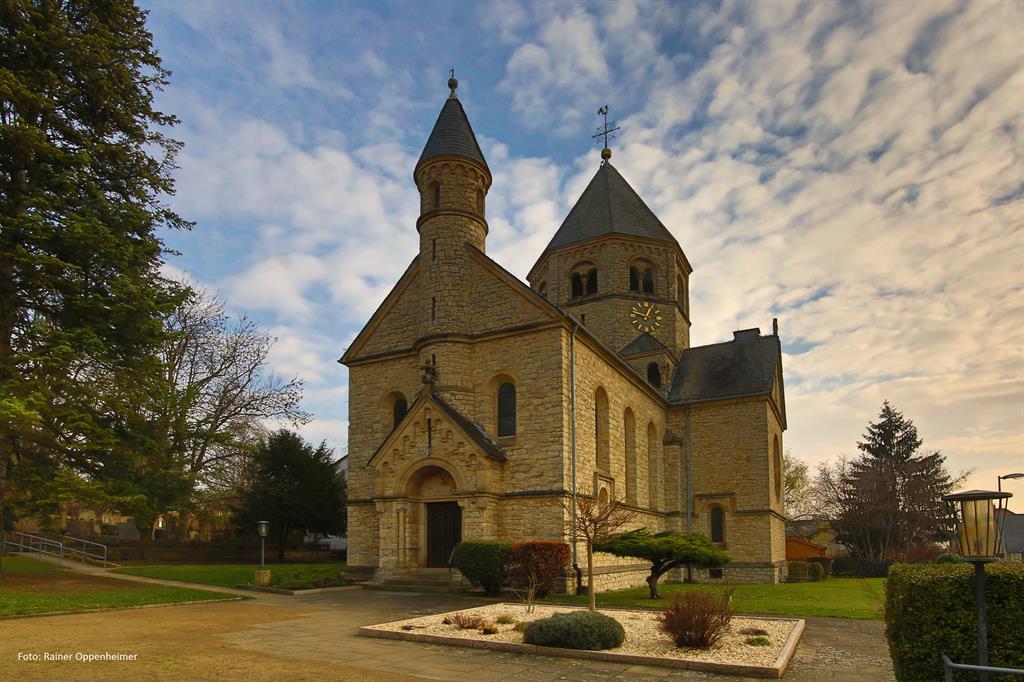
The church, often referred to colloquially as the "Selztaldom", rightly holds this title. Favorably positioned on the outskirts, thus significantly shaping the local skyline and landscape, it serves as an outstanding testament to late 19th-century church architecture. Built in the neo-Romanesque style in 1888 after just under two years of construction, the parish church consciously connects to the mindset of that era. Notably, the inscriptions on the first bells proclaimed sacred-patriotic slogans of the last two German emperors. The outer building materials largely come from the region. Robust limestone blocks masterfully alternate with heavily grained sandstone elements. Above the crossing of the cruciform layout rises a well-proportioned octagon. The massive entrance door is adorned with a tympanum relief of the Lamb of God lying on the book with the seven seals. The remarkably elegant interior features, especially the vividly colored stained glass of the large rosettes in the transept and choir windows, steeply arched triumphal arches with unique astrological symbol decorations, and a very three-dimensional wooden coffered ceiling design in the nave.
In the adjoining eastern cemetery, the historically designed family crypt of the Gerhardt family serves as a reminder that their material generosity significantly contributed to the successful implementation of the ambitious new building project of the parish community in 1888.
Somewhat off to the side stands a notably unconventional "Napoleon stone". Donated in 1844 by veterans from Großwinternheim who served under the French flag, it honors the participants in the Napoleonic campaigns.